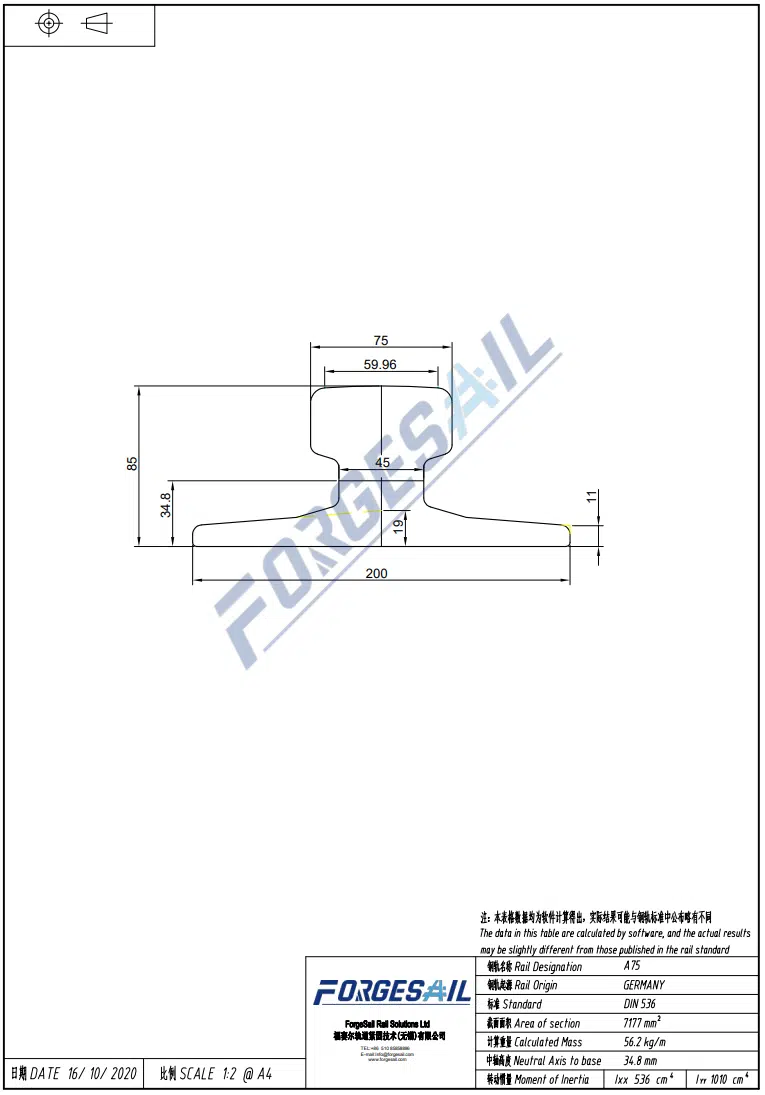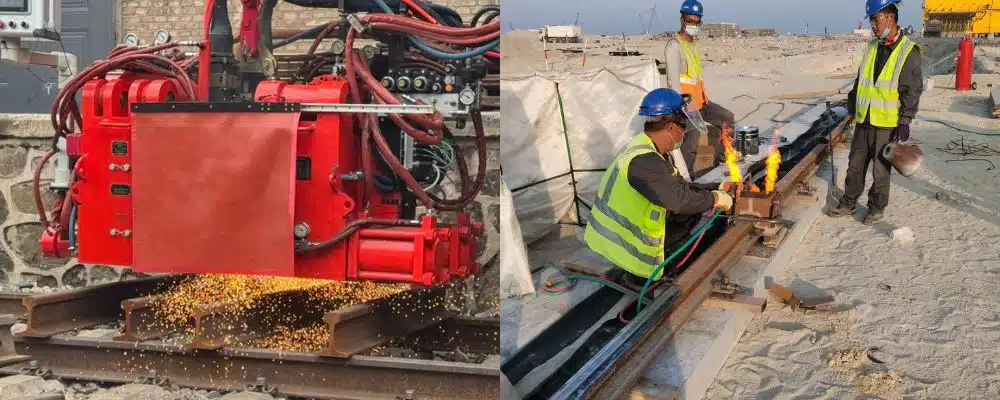
Choosing between flash butt vs thermite welding is one of the most important decisions in any rail project. Each method has distinct strengths, weaknesses, and ideal applications. Understanding the flash butt vs thermite welding comparison helps you avoid costly mistakes, slower installation, or premature weld failure.
This guide breaks down the 7 key differences between flash butt vs thermite welding — covering cost, speed, strength, portability, and best-use scenarios — so you can confidently decide which method fits your track, budget, and timeline. Whether you’re new to the flash butt vs thermite welding debate or a seasoned engineer, this article has actionable insights.
What Is Flash Butt Welding?
Flash butt welding (also called flash welding or FBW) is an electrical resistance welding process. The rail ends are clamped in a machine, aligned, and an electric current passes through them. The resistance generates intense heat at the joint interface, creating a “flash” of molten metal. Once the rails reach welding temperature, the machine applies hydraulic pressure to forge them together.
Key characteristics:
- Uses electric current — no filler metal or consumables
- Requires a heavy welding machine (stationary or mobile)
- Produces clean, narrow weld bead with minimal excess material
- Typically performed in a factory or with specialized track-mounted equipment

What Is Thermite Welding?
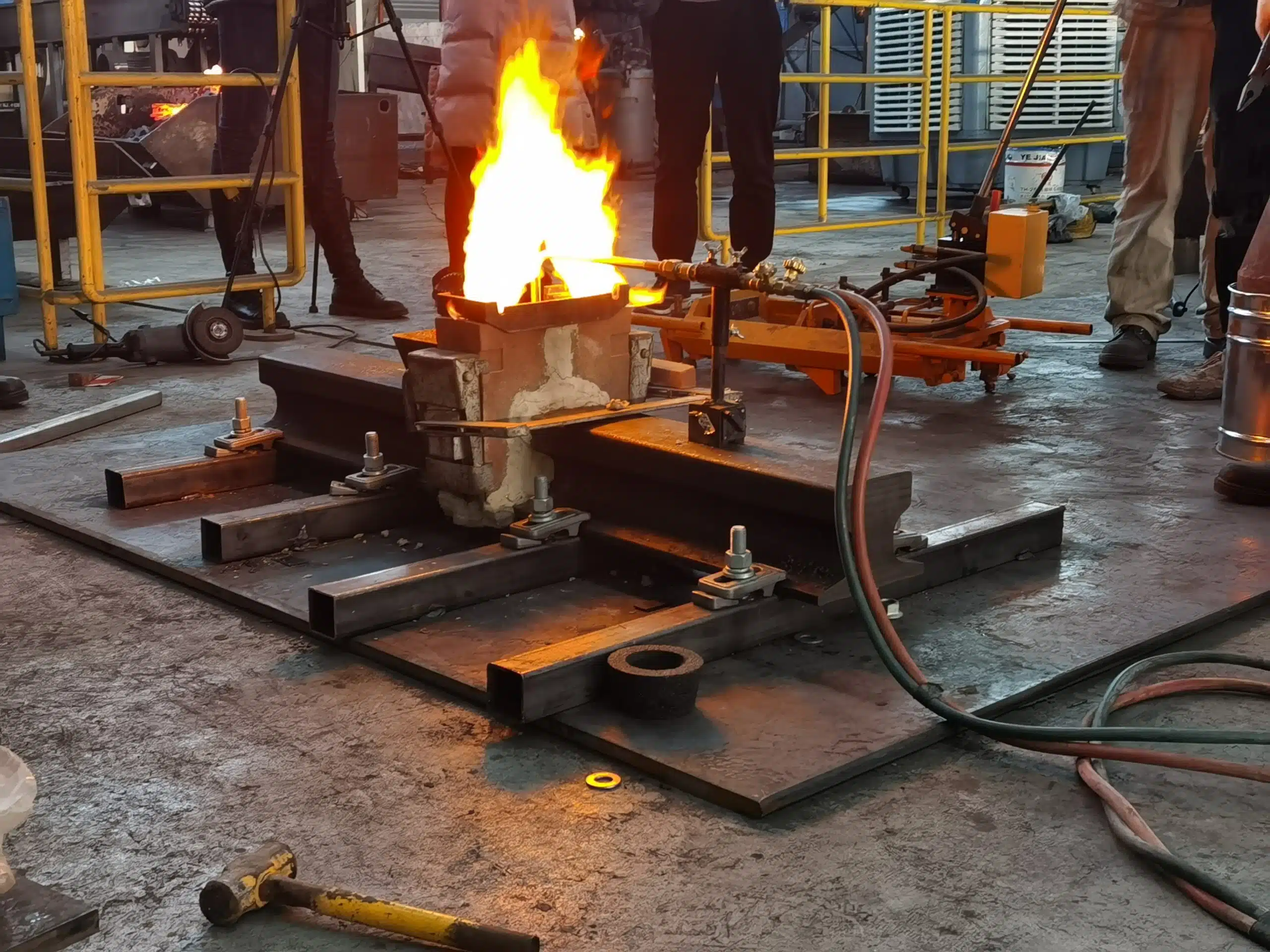
Thermite welding (also called aluminothermic welding. FORGESAIL offers complete thermite welding kits for field applications) uses an exothermic chemical reaction between aluminum powder and iron oxide to produce superheated molten steel at approximately 2,500°C (4,500°F). This molten metal flows into a mold around the rail gap, fusing the two rail ends together.
Key characteristics:
- Uses a chemical reaction — no electricity needed
- Equipment is lightweight and portable
- Requires consumables (powder, crucible, mold) for every weld
- Can be performed anywhere, even in remote or underground locations
Flash Butt Welding vs Thermite Welding: 7 Key Differences
1. Weld Strength and Quality
In the flash butt vs thermite welding strength debate, Flash butt welding consistently produces welds with 95–100% of the base rail strength. The controlled electrical process creates a homogenous joint with a narrow heat-affected zone (HAZ) and minimal inclusions.
Thermite welding typically achieves 90–96% of base metal static tensile strength. The cast structure of a thermite weld has a wider heat-affected zone (HAZ) and slightly different grain structure compared to flash butt’s forged fine-grain joint. The practical difference, however, is less about static strength and more about fatigue performance and impact toughness: flash butt’s forged microstructure delivers superior resistance to repeated wheel loading. Modern certified thermite kits can approach flash butt quality in controlled conditions, but the inherent variability of a manual chemical reaction means flash butt remains the gold standard for fatigue-critical mainline applications.
Winner: Flash butt welding — higher and more consistent weld quality.

2. Speed of Installation
When evaluating the flash butt vs thermite welding speed, A flash butt weld takes approximately 1–3 minutes of welding time, plus setup, finishing, and non-destructive testing. Mobile flash butt machines can complete 15–30 welds per shift under typical field conditions.
A thermite weld takes 10–20 minutes from preheating to completion, plus mold setup and cooling. A skilled two-person crew can complete 10–15 thermite welds per shift.
However, flash butt machines require significant setup time at each new worksite: machine positioning takes 1–2 hours, plus crane transport between sites, generator setup, and rail alignment. These mobilization overheads accumulate rapidly on distributed projects. At a single continuous site, flash butt’s per-weld cycle is faster once running. But for jobs with scattered joints across multiple locations, thermite’s rapid per-joint setup often results in higher overall productivity.
Winner: Thermite for small scattered jobs with frequent moves; flash butt for long continuous welding campaigns.
3. Equipment and Setup Cost
The flash butt vs thermite welding cost comparison begins with the machine itself. A new mobile flash butt welding machine costs between $1,200,000 and $3,500,000 depending on specification and manufacturer — used units range from $150,000 to $500,000. Beyond the machine itself, flash butt requires a dedicated generator (150–400 kVA), transport trailers, crane hire, a trained operator, a hydraulic technician, and a certified electrician. These auxiliary costs are frequently overlooked but can equal the machine depreciation over a project’s life.
| Factor | Flash Butt Welding | Thermite Welding |
| Machine/Kit Cost | $1,200,000 – $3,500,000 (new mobile unit) | $99 – $3,000+ |
| Per-Weld Consumables | Minimal (electricity) | $50 – $150 |
| Maintenance | High (hydraulics, electronics) | Low (basic tool care) |
| Power Requirement | 150–400 kVA generator | Oxy-propane/acetylene for preheating |
| Skilled Operator | Yes, specialized training | Yes, but easier to train |
Thermite welding, by contrast, has minimal upfront cost. A complete welding kit (crucible, mold, powder, and tools) costs roughly $2,000–$5,000, and consumables per weld run $50–$150. The same 50 welds cost roughly $2,500–$7,500 in materials. However, this comparison only captures direct consumable costs. A complete thermite cost analysis should also include preheating gas (oxygen-acetylene/propane), replacement molds, grinding wheels for post-weld finishing, and ultrasonic testing. Flash butt’s total per-weld cost includes machine depreciation, transport, generator fuel, and maintenance — costs that only become competitive at high annual volumes. See the decision guide below for a framework tailored to your project profile.
Winner: Thermite welding — significantly lower initial investment.
4. Portability and Accessibility
In the flash butt vs thermite welding portability comparison, flash butt welding machines are heavy — stationary factory units weigh 30–60 tonnes, and mobile track-mounted units still weigh 10–25 tonnes. They need crane access, flat work site, and high-capacity generator.
Thermite welding kits fit in a pickup truck. The entire kit can be carried by two workers to the weld site. This portability advantage in the flash butt vs thermite welding comparison makes thermite the only viable option for:
- Remote mine sites
- Underground mining tunnels (coal, mineral)
- Crane rails inside existing buildings
- Constrained urban track renewal
- Emergency repair after derailments
Winner: Thermite welding — unbeatable portability.

5. Applications and Suitability
| Application | Recommended Method | Reason |
| High-speed mainline CWR | Flash butt | Highest strength, consistency |
| Heavy-haul freight corridors | Flash butt | Longest fatigue life |
| Metro and light rail tunnels | FBW (primary); Thermite (repairs) | FBW standard for new tunnel construction; thermite for confined repairs |
| Port and crane rails | Thermite | Easy setup on elevated structures |
| Mine site tracks | Thermite | Remote access, no power needed |
| Emergency repairs | Thermite | Fast setup, mobile |
| Turnouts and crossings | FBW (mainline); Thermite (siding/repair) | Mobile FBW standard for mainline turnouts; thermite for confined-space repairs |
| Rail yard sidings | Thermite | Low volume, scattered joints |
Flash butt welding is the preferred method for mainline railway construction in the flash butt vs thermite welding applications analysis. High-speed rail and heavy-haul freight corridors where thousands of welds per year demand consistent, high-strength joints. Mobile flash butt welding is also widely used for turnouts and crossings on high-speed and heavy-haul lines — contrary to a common misconception, dedicated mobile flash butt machines for switch and crossing welding are mature technology. In metro tunnel construction, track-laying trains equipped with mobile flash butt welders are the standard method for long welded rail installation; thermite is reserved for confined-space repairs and emergency restoration where the flash butt car cannot reach.
Thermite welding excels in scenarios where equipment access is genuinely limited: crane rails on elevated gantries, port terminals, mine sites, emergency derailment repairs, short industrial sidings, narrow-gauge railways, and confined-space repairs in tunnels or tight urban corridors. Its portability and independence from electrical supply make it the default choice for specialty and repair work.
Winner: Flash butt for mainline, high-speed, and high-volume trackwork including turnouts and tunnel construction. Thermite for crane rails, emergency repairs, remote sites with no equipment access, and confined-space repairs where mobile flash butt cannot reach.
6. Long-Term Performance
Studies by Holland and leading rail authorities show that in the flash butt vs thermite welding lifecycle comparison, under heavy mainline traffic, flash butt welds can achieve 2–3 times the fatigue life of thermite welds — the gap narrows to approximately 30% in lower-tonnage applications. The primary failure mode for thermite welds is battering under repeated wheel loads, driven by their cast microstructure which is more prone to porosity and inclusions than flash butt’s forged fine-grain joint.
However, for low-traffic applications (sidings, yards, crane rails with <1 million gross tonnes per year), both methods deliver excellent service life. This nuance in the flash butt vs thermite welding lifecycle comparison helps smaller operators choose cost-effectively.
Winner: Flash butt welding for high-traffic mainline applications.
7. Safety and Environmental Factors
Flash butt welding involves high-voltage electricity, hydraulic pressure risks, and flying sparks. The machine’s automated controls reduce human error.
Thermite welding involves an exothermic reaction at ~2,500°C with molten metal splash risk, hazardous fumes (requiring ventilation in confined spaces), and a severe burn/fire hazard zone. Operators need heat-resistant PPE, fire watch, and strict adherence to reaction-safety protocols. Thermite powder is classified as dangerous goods (Class 4.3 — water-reactive) for shipping and storage. The process relies on manual execution throughout, meaning operator error carries immediate severe consequences.
Winner: No clear winner — the risk profiles are fundamentally different. Flash butt hazards (high voltage, hydraulic pressure, flying sparks) are equipment-related and largely controllable through machine safety systems and operator training. Thermite hazards (2,500°C molten metal, explosive chemical reaction, hazardous fumes, dangerous-goods handling) are process-related, with higher immediate severity in the event of failure and greater dependence on manual procedures. Choose based on your crew’s training level, site ventilation, and risk tolerance.
Which Method Should You Choose?
The decision between flash butt vs thermite welding comes down to three factors:
1. Volume — At very high annual volumes (several hundred welds or more), flash butt’s fixed cost can be amortized over more joints, reducing per-weld cost. At lower volumes, thermite’s minimal upfront investment is generally more economical. The exact breakeven depends on equipment type, site logistics, and local costs — consult a rail welding specialist for project-specific analysis.
2. Location — Can you get a 20-tonne machine to the site? If not, choose thermite.
3. Performance requirement — Mainline high-speed rail demands flash butt. For crane rails, mine tracks, and sidings, thermite delivers excellent results at a fraction of the cost.
Why ForgeSail Recommends Thermite Welding for Crane Rails
For crane rail installations, port terminals, and industrial tracks, thermite welding is the proven standard. The portability, low equipment cost, and ability to weld on elevated crane girders make it the practical choice. ForgeSail’s certified aluminothermic welding kits meet EN 14730 standards and are trusted by ports, mines, and heavy industry worldwide. For the majority of industrial rail projects — especially those involving crane rails, sidings, and mine sites — the flash butt vs thermite welding decision clearly favors thermite.

Conclusion
Flash butt welding vs thermite welding is not a contest — it’s a choice based on project requirements. Flash butt delivers unmatched strength and consistency for high-volume mainline work. Thermite welding offers portability, low cost, and flexibility that no machine can match. When considering flash butt vs thermite welding for your next rail project, start by evaluating your volume, location, and performance needs.
Need expert advice on the flash butt vs thermite welding decision for your rail project?Contact the FORGESAIL team today.