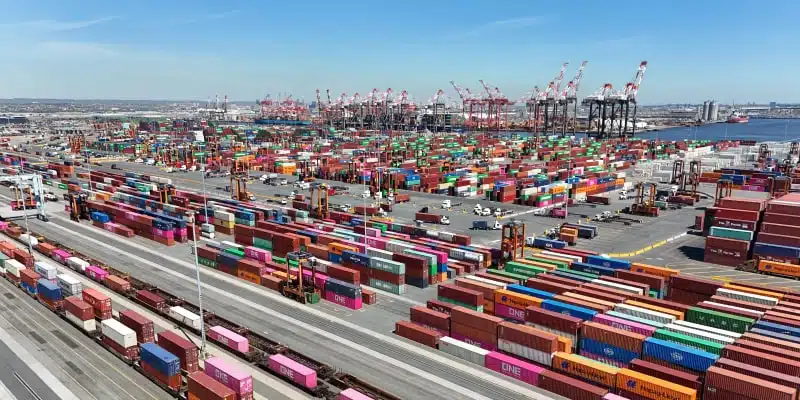
As global trade continues to expand, the efficiency of port logistics has become a key factor in economic competitiveness. At the heart of every modern port lies a reliable Port Crane Rail Systems — the critical infrastructure that connects ship-to-shore operations with inland transport.
From PSA Singapore to Port of Rotterdam, ports worldwide are investing heavily in next-generation track technologies to support faster operations, heavier loads, and more sustainable growth. Yet, as ports grow larger and busier, stability, efficiency, and sustainability remain the three defining challenges for the future of port rail systems.Modern port crane rail. Explore FORGESAIL crane rail products for port applications systems must now support higher container throughput, heavier
ship-to-shore cranes, and fully automated operations. From terminal rail tracks to quay crane runways, the demand for reliable port crane rail solutions has never been greater. This guide examines how advanced rail technologies address the core challenges of stability, efficiency, and sustainability.
Port Crane Rail System Stability: The Foundation of Safety
Track settlement and ground deformation are persistent issues in coastal environments, especially in reclaimed or soft-soil areas like those at Tianjin Port and Port Klang. Uneven settlement can lead to misalignment, vibration, and high maintenance costs.
To address these challenges, Forgesail has developed the Anti-Settlement Track System, an advanced solution engineered for long-term ground stability under dynamic loads.
This system has been successfully tested in bulk terminal railways and container handling yards across Asia and Europe, ensuring consistent rail alignment and performance even after years of heavy operation.
How Port Crane Rail Systems Improve Operational Efficiency
For global operators such as Hutchison Ports and APM Terminals, every minute of downtime directly affects productivity and ship turnaround time. Traditional rail maintenance often requires partial shutdowns, disrupting daily operations.
Forgesail’s modular track design and integrated installation system provide faster assembly, easier replacement, and significantly reduced maintenance time.
In recent port crane rail upgrades, our clients have reported over 30% shorter installation periods and lower lifetime maintenance costs, demonstrating how efficiency and innovation can work hand in hand.
Sustainable Port Crane Rail Systems for the Next Generation
Modern ports are under increasing pressure to reduce their carbon footprint and comply with green logistics standards.
From Los Angeles Port to Hamburg Port, sustainability is driving investment decisions.
Forgesail’s engineering philosophy emphasizes:
- Recyclable and corrosion-resistant materials,
- Extended lifecycle components,
- Reduced environmental disruption during installation.
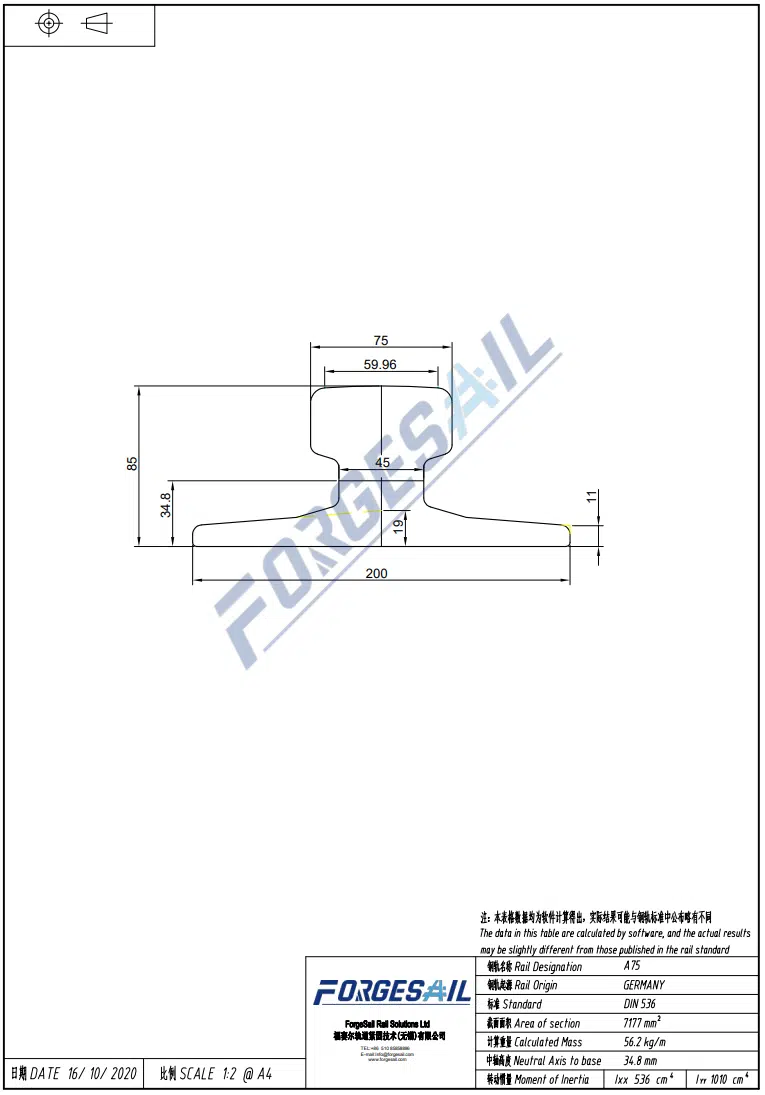
By minimizing material waste and optimizing energy usage, Forgesail helps port operators align with international sustainability goals such as ISO 14001 and ESG compliance frameworks. Different rail profiles play a critical role in crane rail stability. QU series crane rails (QU70, QU80, QU100, QU120) are widely used in Asian and Chinese ports, while European terminals typically specify DIN 536 A series profiles such as A75, A100, and A150. Selecting the correct rail section matched to the expected wheel load and operating speed is essential for maintaining long-term track alignment in busy container yards.
A Vision Forward
The future of port rail infrastructure lies in systems that combine precision engineering with environmental responsibility.
At Forgesail, we are proud to collaborate with global port contractors and EPC companies to redefine what stability and performance mean in the modern logistics era.

Our mission is simple:
To create port crane rail systems that empower ports worldwide to operate more safely, more efficiently, and more sustainably.
Key Components of Modern Port Crane Rail Systems
A complete port crane rail system includes several critical components: crane rails (QU or DIN A series), rail clips (welded or bolted), elastic rail pads, sole plates, buffer stops, and grouting materials. Each element must be carefully selected and properly installed to ensure safe, reliable crane operations.